Summary
Tesla’s Autopilot is an advanced driver-assistance system introduced in 2015 that combines cameras, sensors, and software to aid driving tasks such as lane keeping and adaptive cruise control. While Tesla markets Autopilot and its more advanced Full Self-Driving (FSD) package as partial automation requiring continuous driver supervision, the systems have been the subject of extensive scrutiny due to safety concerns and numerous crashes, including several fatal incidents. The technology’s development has pushed the boundaries of semi-autonomous driving, but its limitations—such as difficulties detecting stationary objects and reliance on camera-based perception—have raised ongoing questions about its reliability and the risks of driver over-reliance.
A particularly tragic case occurred in June 2026, when a Tesla Model 3 operating with Autopilot engaged crashed into a residential home in Katy, Texas, killing 76-year-old Martha Avila. This incident prompted a federal investigation by the National Highway Traffic Safety Administration (NHTSA) and intensified public and regulatory scrutiny of Tesla’s driver-assistance systems. Investigations have focused on the vehicle’s data logs, driver behavior, and system performance, with critics highlighting recurring issues such as misuse of Autopilot outside its intended operational domain and inadequate driver monitoring measures.
Tesla has defended Autopilot’s safety record and reiterated that the system requires attentive human supervision at all times. Company representatives, including CEO Elon Musk and Vice President of Autopilot Ashok Elluswamy, have emphasized that the driver involved in the Texas crash had manually overridden the system by pressing the accelerator and that Autopilot is not designed to enable fully autonomous driving. Nonetheless, regulatory authorities continue to investigate and call for stricter safeguards, noting that Tesla has yet to fully address challenges such as ensuring driver attentiveness and preventing foreseeable misuse.
The controversy surrounding Tesla Autopilot underscores broader challenges in the autonomous vehicle industry related to safety, regulation, and public trust. Multiple federal investigations, legal actions, and calls for enhanced regulatory frameworks reflect the complex balance between innovation and safety oversight. Experts and advocates urge clear operational boundaries, improved driver monitoring, and transparent communication of system capabilities to mitigate risks while advancing the development of autonomous technologies.
Background
Tesla Autopilot, first introduced in October 2015 as part of software version 7.0, is an advanced driver-assistance system that combines cameras, ultrasonic sensors, and radar (in older models) to perceive the environment and assist with driving tasks. Over the years, Tesla has continuously updated the system to improve its functionality and safety, including enhancements such as Traffic-Aware Cruise Control, Autosteer, and driver attention monitoring features. The Autopilot hardware and software have evolved through several generations, from the original Hardware 1 (HW1) to Hardware 2.5 (HW2.5) and beyond, incorporating more powerful processors and redundant systems to support increasingly sophisticated neural network-based driving capabilities.
Despite its popularity, Tesla Autopilot has faced significant criticism and regulatory scrutiny due to safety concerns and reported crashes. Federal regulators, including the National Highway Traffic Safety Administration (NHTSA), have conducted numerous investigations—over three dozen since 2016—into crashes involving Tesla’s partially automated driving systems. In 2023, Tesla recalled more than two million vehicles after the NHTSA found that the company had not adequately ensured driver attentiveness during Autopilot use, which had led to fatal accidents. These concerns have been amplified by documented cases of driver distraction, misuse of the system outside its intended Operational Design Domain (ODD), and failures to detect certain hazards such as stationary emergency vehicles or trailers.
Tesla’s Autopilot system requires active driver supervision and does not make the vehicle fully autonomous. The company has emphasized that drivers must remain attentive and be ready to take control at any time, as the system is designed to be overridden before encountering dangerous situations. However, the definition and implementation of the ODD—conditions under which the system is intended to operate safely—remain a topic of debate and ongoing research. For example, Tesla’s Autopilot is officially intended to function on controlled-access highways with clear lane markings and no cross traffic, but drivers have reportedly used it in conditions outside these parameters.
Software updates continue to play a crucial role in Tesla’s strategy to improve Autopilot’s capabilities and safety. Tesla’s vehicles have accumulated billions of miles driven on public roads, providing data to train the neural networks that power Autopilot’s decision-making. Recent software versions have introduced driver-facing cameras to monitor attentiveness and reduce misuse, although some studies have found these measures can still be circumvented. Tesla’s CEO, Elon Musk, has stated that full autonomy is fundamentally a software challenge, as the existing hardware is capable of supporting fully autonomous driving once advanced AI systems are developed.
The Texas Crash Incident
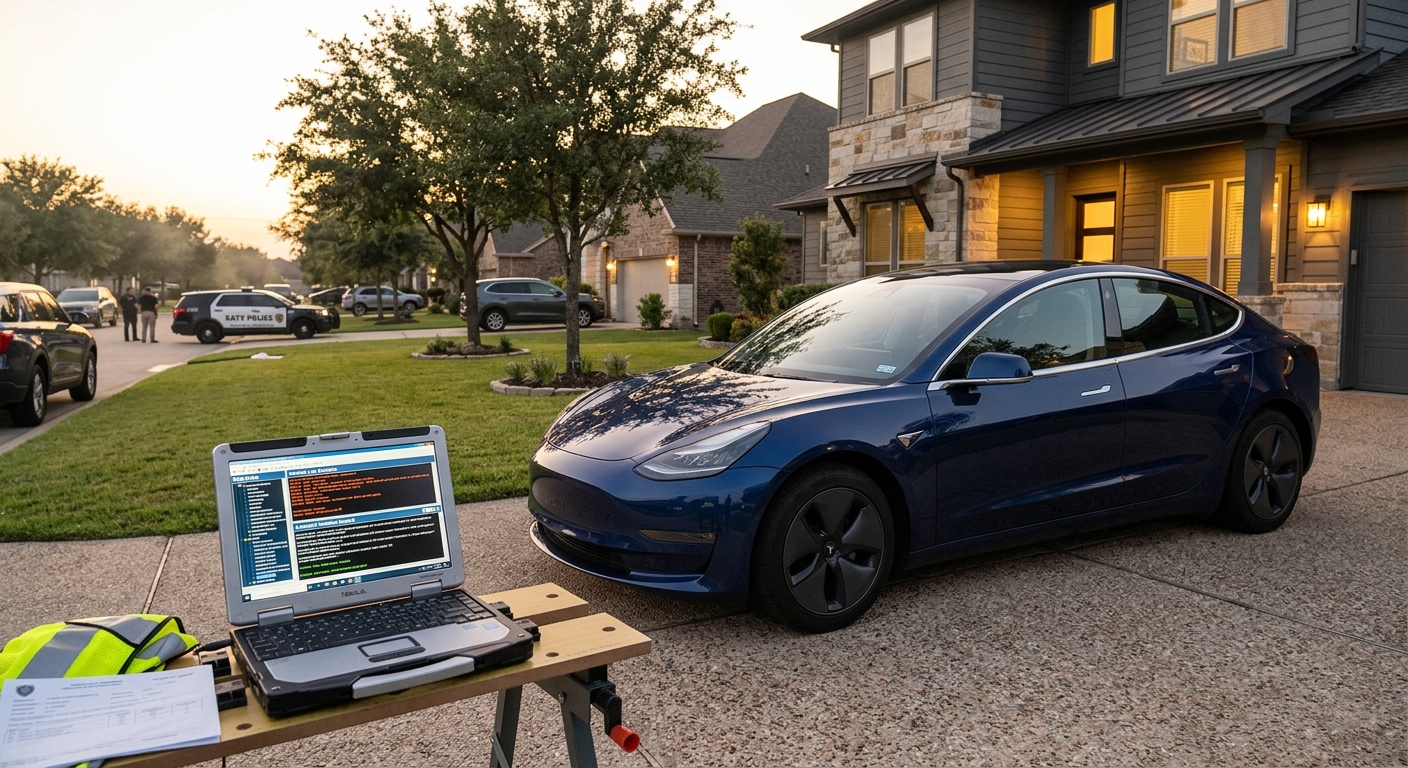
On June 19, 2026, a Tesla Model 3 crashed into a residential home in Katy, Texas, approximately 30 miles west of Houston, resulting in the tragic death of 76-year-old Martha Avila. The driver involved reported to law enforcement that the vehicle’s automated driving-assistance system, commonly referred to as Autopilot, was engaged at the time of the crash. According to the Harris County Sheriff’s Office, the driver showed no signs of intoxication and cooperated fully with investigators. The crash occurred in the 21300 block of Rose Hollow Lane, and the driver admitted to failing to maintain a single lane before leaving the roadway and striking the residence.
Following the incident, the National Highway Traffic Safety Administration (NHTSA) opened a formal federal investigation under its “special crash investigations” program, which focuses on accidents involving unusual circumstances. The Harris County Sheriff’s Office Vehicular Crimes Division has been leading the investigation, examining the vehicle’s automated systems, the driver’s behavior, and the speed of the car prior to impact. Officials have worked closely with individuals familiar with Tesla vehicles to determine the extent of driver control during the incident.
The crash intensified scrutiny on Tesla’s Autopilot system, which requires drivers to remain attentive and ready to intervene at all times despite its advanced capabilities. Critics and safety advocates have long raised concerns about the system’s limitations, including its inability to reliably detect stationary objects or certain roadway features, and the risk of driver over-reliance on the technology. Past investigations and safety evaluations have highlighted issues such as driver distraction and misuse outside the intended operational domains of Autopilot, as well as the system’s failure to recognize obstacles like trailers and emergency vehicles.
Tesla markets two primary driver-assistance products: the original Autopilot system and the more advanced Full Self-Driving (Supervised) package, both of which mandate continuous driver supervision. The company has emphasized safety features including automatic emergency braking and emergency lane departure avoidance, which aim to mitigate collisions by detecting vehicles, obstacles, and lane departures. However, some reports suggest that changes to sensor configurations—such as the removal of forward-facing radar in favor of camera-based Tesla Vision—have correlated with increased incidents and near misses.
The Texas crash has sparked renewed debate about the reliability and safety of partially automated driving systems, highlighting the challenges of balancing technological innovation with rigorous safety safeguards. Advocates have called for careful regulatory oversight, emphasizing that even a single fatality associated with such technologies can have profound and lasting impacts on families and communities. Tesla continues to defend its Autopilot technology while reiterating the necessity for drivers to maintain control and vigilance when using automated features.
Tesla’s Official Response
Following the tragic crash in Texas involving a Tesla vehicle operating with Autopilot engaged, Tesla and its executives issued multiple statements defending the capabilities and limitations of their driver-assistance systems. Tesla Vice President of Autopilot Ashok Elluswamy responded publicly via the social platform X, emphasizing that the driver had manually overridden the system by fully pressing the accelerator pedal and reaching a speed of 73 mph in a residential area prior to the crash. Elluswamy noted that the driver maintained accelerator input even after the collision, suggesting that the crash circumstances were not solely attributable to Autopilot’s operation.
Tesla CEO Elon Musk also addressed the incident on X, expressing skepticism about the nature of the crash and clarifying that the Full Self-Driving (FSD) system is designed to operate at slow speeds in neighborhood streets, contrasting this with the high-speed nature of the accident. Musk’s comments underscored the distinction between the marketed capabilities and the actual supervised use of Tesla’s partially automated driving systems.
Tesla has consistently cautioned that its Autopilot and FSD features require active driver supervision and do not render the vehicle fully autonomous. The company’s official guidance stresses that drivers must remain attentive, keep their hands on the wheel, and be prepared to take over at any moment, as these systems assist but do not replace human control. In fact, Tesla’s owner manuals explicitly state that FSD (Supervised) requires continuous driver attention and caution to mitigate risks associated with system limitations.
Amid criticism and investigations into crashes involving Autopilot, Tesla has acknowledged some past over-optimism regarding the timeline for achieving full SAE Level 5 autonomy, with Musk later conceding that earlier predictions did not reflect engineering reality. Tesla also responded to concerns about driver monitoring by gradually reducing the frequency of “nag” warnings that prompt drivers to keep their hands on the wheel, although regulatory authorities have scrutinized undocumented system modes that could potentially reduce driver oversight.
Regulatory and Legal Reactions
The fatal Tesla crash in Texas, where the vehicle’s Autopilot system was reportedly engaged at the time of the accident, has intensified scrutiny of Tesla’s advanced driver-assistance technologies by federal and local authorities. The National Highway Traffic Safety Administration (NHTSA) opened a special investigation into the crash, marking one of over 40 probes the agency has launched into Tesla crashes potentially involving Autopilot or Full Self-Driving (FSD) systems in recent years. The Harris County Sheriff’s Office indicated it would present its findings to the local district attorney to evaluate whether criminal charges were warranted. However, determining if the Autopilot was truly active, overridden, or malfunctioning is pending a detailed review of the vehicle’s data logs.
Tesla’s driver-assistance systems, marketed under the names Autopilot and Full Self-Driving (Supervised), provide partial vehicle automation requiring active driver supervision and are classified as Level 2 automation by SAE International. Despite the systems’ capabilities—including autosteer, traffic-aware cruise control, semi-autonomous navigation, self-parking, and summon features—regulatory bodies and safety advocates have raised concerns over their limitations and safety risks. The National Transportation Safety Board (NTSB) has criticized Tesla for lacking adequate safeguards to prevent foreseeable misuse of Autopilot, especially after fatal crashes where driver distraction or system limitations played a role.
Federal investigations have uncovered recurring safety issues, such as failures to detect stationary emergency vehicles and driver inattentiveness while using Autopilot, contributing to numerous crashes and fatalities. In 2023, the NHTSA conducted a two-year investigation culminating in a recall of over two million Tesla vehicles, citing insufficient measures by Tesla to ensure drivers remained attentive during Autopilot use. Additionally, the NHTSA Office of Defects Investigation (ODI) opened a preliminary evaluation focused on Tesla vehicles striking stationary emergency vehicles while Autopilot or Traffic Aware Cruise Control was active.
Legal challenges have also mounted. Tesla settled a lawsuit in 2024 related to a 2018 fatality attributed to its driver-assistance software, acknowledging some responsibility for the consequences of system failures and misuse. In late February 2023, Tesla shareholders filed a class-action lawsuit alleging that Tesla significantly overstated the efficacy and safety of Autopilot and FSD technologies, which they argued contributed to increased accident risk and regulatory scrutiny. Tesla has defended itself against such claims, filing motions to dismiss based on arbitration clauses in purchase agreements and characterizing the controversies as a failure to achieve long-term aspirational goals rather than fraud.
Regulatory environments continue to evolve in response to the growing deployment of advanced driver-assistance systems. California, for example, has proposed rules requiring extensive safety driver testing for autonomous vehicle companies before permitting driverless operations, while exempting certain ADAS-equipped vehicles from mandatory crash reporting unless serious injuries or fatalities occur. Meanwhile, safety advocates urge caution against regulatory rollbacks that would reduce passenger visibility and situational awareness during vehicle operation, highlighting the necessity of stringent safety standards.
The recent Texas crash and ongoing investigations highlight the challenges regulators face balancing innovation and safety. The NHTSA’s continued probes into Tesla’s driver-assistance technologies, combined with local legal actions, underscore the need for clearer standards, better system safeguards, and increased driver education to mitigate risks associated with partial vehicle automation.
Technical Analysis of Autopilot System Challenges
Tesla’s Autopilot system, first released in October 2015 as part of software version 7.0, has undergone significant iterations and updates aimed at enhancing its capabilities and safety features. Early versions focused on basic functionalities such as automatic parking and low-speed summoning, originally developed in partnership with Mobileye until their split in 2016. Subsequent updates introduced advanced driver-assistance features including adaptive cruise control (ACC), automatic emergency braking (AEB), and lane centering, with version 8.0 notably processing radar signals to create a point cloud for improved navigation in low-visibility conditions.
Despite these advancements, the system faces several technical and operational challenges. One critical limitation involves the reliability of driver attentiveness monitoring. Initially, Tesla’s driver-facing camera detected whether the driver was looking at the road, issuing warnings and disabling Autopilot if distraction was detected. However, early versions could be circumvented, for instance by using doll heads to simulate driver presence, and were prone to false warnings triggered by sunglasses. More recent updates have expanded monitoring capabilities to detect handheld device use, disconnecting Autopilot if a phone or tablet is held, and added support to reduce false positives when drivers wear sunglasses. Nevertheless, Consumer Reports noted that drivers can still use Autopilot while looking away or engaging with phones, raising concerns about driver supervision effectiveness.
Another technical challenge arises from sensor limitations and software constraints. Tesla’s system relies heavily on a camera-only approach, deliberately forgoing lidar and radar backups in favor of cost and complexity reduction. This design makes the system vulnerable in scenarios where cameras are impaired, such as adverse weather or glare, limiting the vehicle’s ability to detect certain obstacles, including stationary vehicles. Notably, the manual cautions that Traffic-Aware Cruise Control may fail to brake or decelerate for stationary objects, particularly at speeds above 50 mph (80 km/h). Additionally, a software error caused premature activation of the AEB system, leading to a recall in 2021 due to false braking events.
Semi-automated functions such as lane changes are dependent on driver interaction and system conditions. While Autopilot can initiate lane changes without driver input when necessary or when detecting slower traffic, the driver must demonstrate attention by touching the steering wheel prior to these maneuvers. Despite this, Consumer Reports found Tesla’s automatic lane-change feature to be “far less competent than a human driver,” highlighting ongoing performance gaps. Furthermore, operational domain challenges exist, as anecdotal evidence indicates that Autopilot’s effectiveness varies by region, possibly due to differing driver monitoring software implementations.
Tesla’s continuous software updates, including machine learning techniques that aggregate data from its fleet to anticipate road conditions and optimize driving behavior, aim to address some of these limitations. However, occasional software faults and unexpected interactions with vehicle systems may introduce new failure modes or undesirable behaviors. Regulatory scrutiny, such as investigations by the National Highway Traffic Safety Administration (NHTSA), emphasizes vulnerabilities related to Tesla’s sensor configuration and the absence of redundancy, especially concerning the system’s capacity to detect and alert when cameras are blinded.
Public and Media Reactions
The tragic Texas crash involving Tesla’s Autopilot system sparked widespread public and media scrutiny, intensifying ongoing debates about the safety and reliability of Tesla’s driver-assistance technologies. Following the incident, the National Highway
Impact on Tesla and the Autonomous Driving Industry
Tesla’s Autopilot and Full Self-Driving (FSD) systems have been at the center of intense scrutiny and controversy following several crashes, including a high-profile fatal incident in Texas. These events have significantly impacted both Tesla’s public perception and the broader autonomous driving industry.
Tesla has faced multiple investigations by federal safety regulators since 2016 regarding its advanced driver assistance systems (ADAS), which include Autopilot and FSD. Over three dozen special crash investigations have been opened, highlighting ongoing concerns about the safety and reliability of Tesla’s partially automated driving technologies. Despite these concerns, Tesla continues to maintain that its systems provide a net safety benefit, citing internal data that suggests a lower fatality rate among drivers using Autopilot compared to the average U.S. driver. However, critics argue Tesla’s comparisons are flawed due to differences in driving conditions and dataset scope.
The controversy has also sparked legal challenges, including findings by a California court and the state’s Department of Motor Vehicles that Tesla engaged in false advertising related to its Autopilot branding. These entities argued that Tesla’s marketing misled consumers about the capabilities and limitations of its driver assistance systems, leading to confusion and potential over-reliance by drivers. As a result, Tesla was compelled to rebrand its driver assistance features, changing the name of the standard Autopilot option in the U.S. to address legal and regulatory pressure.
Industry experts and regulators emphasize that Tesla’s vehicles currently operate at Level 2 automation, which requires continuous driver supervision and does not equate to full autonomy. Elon Musk’s repeated predictions since 2013 that Tesla would achieve SAE Level 5 autonomy within one to three years remain unmet as of mid-2026, drawing criticism for potentially overstated claims and fostering unrealistic consumer expectations. This discrepancy between marketed capabilities and actual performance has raised concerns about driver trust and system misuse, especially in complex or edge-case driving scenarios.
The repercussions extend beyond Tesla, affecting the autonomous driving sector as a whole. The ongoing investigations and publicized incidents have underscored the technological challenges in achieving higher levels of vehicle autonomy, such as reliably detecting stationary objects and handling diverse real-world conditions. These challenges highlight the substantial gap between current Level 2 and future Level 4 or 5 autonomous systems. Moreover, regulatory bodies are adapting reporting requirements and safety oversight frameworks for advanced driver assistance systems, balancing innovation with public safety.
Broader Implications for Autonomous Vehicle Regulation and Safety
The development and deployment of autonomous vehicle (AV) technologies such as Tesla’s Autopilot and Full Self-Driving (FSD) systems have prompted significant regulatory scrutiny and safety concerns, highlighting broader implications for the future of AV regulation and public safety. Current regulatory frameworks mandate active driver supervision when using these advanced driver assistance features, emphasizing that these systems do not render vehicles fully autonomous and require continuous driver attention.
Recent regulatory proposals, particularly in California, aim to strengthen safety protocols by requiring extensive testing before companies can conduct driverless operations. For instance, companies must complete at least 50,000 miles (approximately 80,467 km) of testing with safety drivers prior to applying for driverless testing permits, reflecting an effort to mitigate risks associated with autonomous vehicle deployment on public roads. Additionally, revisions in reporting requirements distinguish between advanced driver assistance systems and fully autonomous systems, streamlining incident reporting while focusing on severe outcomes such as fatalities and serious injuries.
Despite these regulatory efforts, real-world incidents continue to raise questions about system limitations and driver reliance on technology. Investigations by agencies like the National Highway Traffic Safety Administration (NHTSA) and the National Transportation Safety Board (NTSB) have highlighted issues including Autopilot’s inability to detect stationary emergency vehicles, driver distraction, and misuse of the system outside its intended operational design domain—specifically on controlled-access highways with clear lane markings and no cross traffic. The NTSB has criticized Tesla for insufficient system safeguards and failure to anticipate predictable misuse, underscoring the ongoing challenges in balancing technological advancement with safety oversight.
Moreover, the NHTSA has initiated numerous investigations into crashes involving Tesla vehicles with active Autopilot or Traffic Aware Cruise Control, particularly focusing on incidents where vehicles collided with stationary emergency responders. These investigations illustrate the complexities regulators face in ensuring that automated systems can safely interact with dynamic and sometimes unpredictable road environments.
Collectively, these developments underscore the importance of robust regulatory frameworks that require rigorous testing, transparent safety reporting, and clear operational boundaries for autonomous systems. They also highlight the critical role of driver vigilance and responsibility, as active safety features currently assist but do not replace human control. The evolving regulatory landscape seeks to address these challenges to foster safer integration of autonomous vehicle technologies while protecting public safety.
The content is provided by Harper Eastwood, 12minread