
Summary
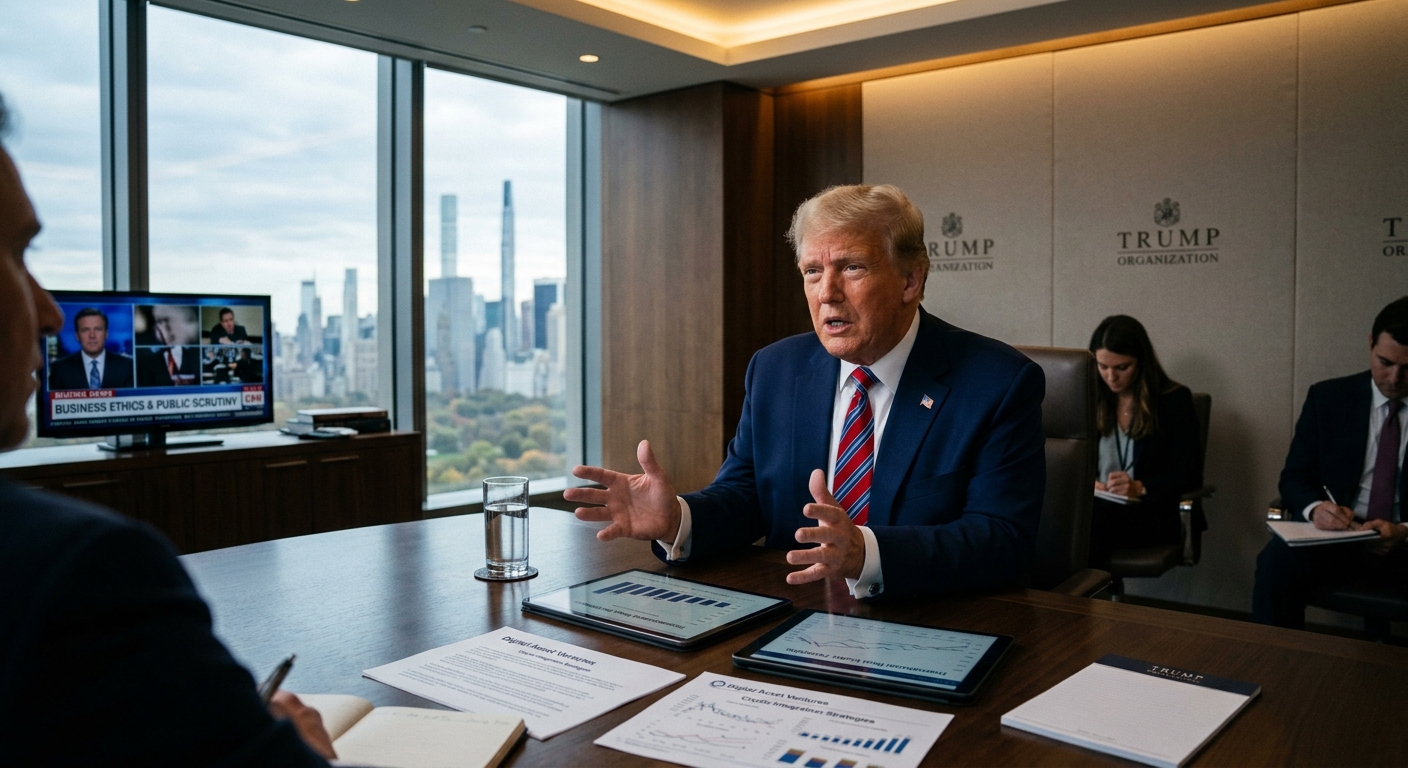
Donald Trump, the 45th and current President of the United States, delivered an exclusive interview in July 2026 offering a candid defense of his extensive business ventures and family enterprises amid ongoing scrutiny. Known initially as a real estate developer and head of the Trump Organization, a family-owned conglomerate, Trump expanded his brand into diverse sectors including hospitality, finance, media, and cryptocurrency over several decades. The interview provided Trump a platform to address controversies surrounding potential conflicts of interest arising from his dual role as a public official and a businessman, particularly as his sons and son-in-law actively manage and grow the family’s holdings.
The Trump family’s business dealings have attracted significant attention due to the blending of private commercial interests with public service, raising ethical questions and political debate. Notably, ventures in cryptocurrency, drone technology, and international real estate have drawn criticism for possible insider benefits and influence peddling, with lawmakers and watchdog groups calling for stronger safeguards and transparency measures. Trump and his representatives have maintained that all activities comply with legal requirements and that appropriate measures are in place to mitigate conflicts, while emphasizing the family’s long-standing business experience independent of his presidency.
In the interview, Trump also discussed his family’s succession plan, which designates his sons to assume leadership of the Trump Organization, highlighting the complexities involved in transitioning a high-profile family business intertwined with political power. The discussion occurred against a backdrop of heightened media scrutiny, legal challenges, and political opposition, all of which have shaped public perceptions of Trump’s business legacy and governance style. This candid engagement reflects ongoing tensions over the intersection of personal wealth, family enterprise, and public accountability in contemporary American politics.
Background
Before assuming the presidency, Donald Trump was primarily known as a real estate mogul leading the Trump Organization, a family-owned business empire that he founded and expanded over several decades. His early career began at his father’s company, Trump Management, which specialized in middle-class rental housing across New York City boroughs such as Brooklyn, Queens, and Staten Island. Throughout the 1980s and 1990s, Trump acquired and developed a variety of high-profile properties, including the Trump Plaza and the iconic Plaza Hotel in New York City, which he restored with significant investment. Additionally, the Trump Organization expanded into Atlantic City with ventures such as Trump Plaza (1984), Trump Marina (1985), and Trump Taj Mahal (1990), marking one of the company’s most notable periods of growth and success.
Beyond real estate, Trump diversified his business activities by licensing his name to numerous building projects and commercial products, achieving mixed results in terms of profitability and brand value. By 2011, Forbes estimated the Trump brand to be worth approximately $200 million. His entrepreneurial ventures included mortgage lending (Trump Financial), residential sales and leasing (Trump Sales and Leasing), real estate brokerage (Trump International Realty), and hospitality and food services under the Trump Restaurants banner. Other ventures included a business education initiative, Trump University (later rebranded as The Trump Entrepreneur Initiative), as well as niche product lines such as Select By Trump coffee drinks and Trump Drinks, an energy beverage targeting Israeli and Palestinian markets.
Following his election as President of the United States in 2016, Trump formally stepped away from managing the Trump Organization, placing his business assets into a revocable trust managed by his sons, Donald Jr. and Eric Trump. This move was part of a broader family succession plan designed to maintain control of the business within the family, while addressing complex issues such as leadership transition, ownership stakes, and governance—common challenges faced by family-owned enterprises. Donald Trump Jr. and Eric Trump took active roles in overseeing the organization’s operations, even as other family members pursued their own business interests. For example, Jared Kushner, Trump’s son-in-law, founded Affinity Partners in 2021, a multibillion-dollar venture capital firm funded largely by investors from the Middle East, a region where Kushner also engaged in political negotiations on behalf of the administration.
The Trump family’s business dealings have at times attracted scrutiny, especially concerning potential conflicts of interest during the Trump presidency. Congressional investigations have focused on the younger Trumps’ investments, which span diverse sectors including drone manufacturing and mining, raising questions about possible insider trading or ethical concerns. Despite these controversies, the Trump brand and family enterprise remain central to the former president’s public identity and continue to shape perceptions of his business legacy.
Overview of the Interview
In a wide-ranging and candid interview with CNBC’s Joe Kernen, President Donald Trump discussed his personal finances, the state of the economy, and ongoing legislation in Congress. The interview, conducted in the Oval Office on July 2, 2026, offered Trump an opportunity to address various controversies surrounding his business ventures and family investments amid his presidency.
During the conversation, Trump defended his family’s business operations, acknowledging the complexities and potential conflicts of interest that arise from holding public office while maintaining private business interests. He expressed regret that the presidency creates difficulties for his children’s investments, but reiterated that appropriate safeguards are in place to mitigate these concerns.
The interview took place against a backdrop of broader political and legal challenges facing the administration, including ongoing scrutiny from ethics watchdogs and political opponents. These groups have raised concerns about potential conflicts linked to Trump-branded businesses and family enterprises, while the White House has maintained that the president’s business affairs are being managed transparently.
This discussion was part of a series of public appearances and interviews in 2026, during which Trump has continued to critique the media’s portrayal of his administration and defend his record on economic and legislative matters. His remarks reflected a defensive stance on both personal and political fronts as he approaches the 18-month mark of his second term.
Detailed Discussion of Business Ventures
Donald Trump’s business ventures span a wide array of industries, including real estate development, hospitality, finance, media, and consumer products. Throughout his career, Trump has leveraged his personal brand to endorse various commercial projects and products, achieving mixed success and substantial public attention.
One notable recent venture is the promotion of the $60 “God Bless the U.S.A.” Bible, launched in March 2024. This edition features a King James Bible alongside key American documents such as the U.S. Constitution, Bill of Rights, Declaration of Independence, and Pledge of Allegiance, as well as the handwritten chorus of the Lee Greenwood song “God Bless the U.S.A.” The Bible is marketed as “the only Bible endorsed by” Trump, with his name and likeness licensed from his company CIC Ventures LLC.
In real estate, Trump has been recognized as a leading developer of luxury properties worldwide. His early projects include the renovation of the Commodore Hotel and the Grand Central Terminal facade in Manhattan. He also purchased the iconic Plaza Hotel in New York City in 1988, investing millions in its restoration. Trump’s real estate portfolio extends globally, with luxury developments such as Trump Residences Gurugram in India, described by local developers as a landmark for the country’s luxury market. International projects continue under Trump branding, including a hotel, golf course, and residences in Oman, although environmental concerns have halted some developments, such as a Trump-branded project in Indonesia slated for early 2025.
During Trump’s second presidential administration, the Trump family—particularly his sons Eric and Donald Jr., as well as son-in-law Jared Kushner—have expanded their business activities, raising concerns about conflicts of interest and influence peddling. Kushner, having ended his official White House advisory role, founded Affinity Partners in 2021, a venture capital firm that has secured billions in funding primarily from Middle Eastern investors, the same region where Kushner is involved in diplomatic negotiations on behalf of the administration.
Trump Media & Technology Group Corp., another business under Trump’s control, saw its stock price peak above $79 per share following its public offering, although it subsequently declined and reported net operating losses. Trump’s personal investment portfolio is heavily concentrated in financial and commodities markets.
Cryptocurrency has emerged as a significant and controversial component of the Trump family’s wealth. Since returning to the White House, Trump reportedly earned more than $1.4 billion from crypto-related income, including $500 million from World Liberty Financial, a cryptocurrency company he co-founded in 2024 with his sons. This involvement has attracted scrutiny and calls for ethical safeguards from lawmakers, who argue that Trump is profiting improperly from his position and the administration’s regulatory actions.
Throughout his career, Trump has also negotiated advantageous deals, such as a 40-year tax abatement for a New York hotel project, which lowered investment risk and incentivized partners to participate. His approach to business often involves leveraging government relationships to benefit his ventures, as seen in various real estate and hospitality projects.
Defense Against Criticisms and Controversies
Throughout his presidency, Donald Trump faced persistent scrutiny over potential conflicts of interest arising from his extensive business holdings. In an exclusive interview, Trump addressed these concerns candidly, emphasizing that even routine business decisions, such as purchasing a truck, could trigger questions due to their connection to him personally. He highlighted that his children had established their own business careers well before his political rise and asserted that he had encouraged them to maintain distance from potential controversies to avoid conflicts.
Critics have intensified their focus on the Trump family’s expanding portfolio, which increasingly includes ventures in cryptocurrency, international real estate, and private investments. Trump’s latest financial disclosure revealed significant income tied to crypto-related ventures, drawing particular attention from ethics watchdogs and political opponents. Despite these concerns, Trump and representatives of the Trump Organization maintained that all appropriate safeguards were in place and underscored that there was “nothing illegal” or improper about the family’s business activities.
Organizations such as Citizens for Responsibility and Ethics in Washington (CREW), along with Democratic lawmakers and former government ethics officials, have argued that the Trump family’s growing business ventures create actual or perceived conflicts of interest. However, Trump dismissed these criticisms as unfounded and emphasized his commitment to transparency and legality in his business dealings.
Additionally, the Trump family developed a succession plan that designates his sons to assume control of the business, reflecting a strategic approach to balancing personal and commercial interests while aiming to mitigate potential conflicts. This plan illustrates their efforts to separate the family’s business operations from Trump’s political role, though skepticism and legal challenges continue to surround these arrangements.
Family Business Dynamics and Ethical Considerations
The Trump family has developed a succession plan aimed at transitioning business leadership to the next generation, particularly with President Trump’s sons assuming control of the family enterprises. This plan reflects a broader approach to managing both commercial and personal goals within the family business framework. However, the family also faces complex considerations including timing, ownership structure, management shares, and capital allocation that must be addressed to ensure a smooth transition. The process of handing over a family business is widely recognized as one of the most challenging decisions for any family firm owner, requiring careful engagement and empowerment of successors in governance and strategic roles. Without a formal succession plan, family businesses risk exacerbating tensions or operational difficulties during leadership changes.
These ethical considerations have been magnified by the family’s active engagement in profit-driven deals, including negotiations by Donald Jr., Eric Trump, and Jared Kushner with foreign governments. Such activities have prompted debate over whether the administration’s diplomatic priorities have been influenced by private business interests. This unprecedented blending of family business dealings with political roles has drawn significant attention to the potential for conflicts between public service and private gain.
Financial Success and Economic Impact
President Donald Trump has credited the success of the stock market for his significant financial gains since returning to the White House, stating that he is “a really good business person” who has made substantial money. According to his 2025 financial disclosure, Trump reported earnings of $2.2 billion, with over $1.4 billion stemming from cryptocurrency-related ventures, including $500 million from World Liberty Financial, a cryptocurrency company he co-founded in 2024 with his sons Eric Trump and Donald Trump Jr..
Trump has maintained that he was unaware of these cryptocurrency investments prior to the disclosure, attributing the day-to-day management of his business empire to his sons, who oversee the Trump Organization and other investment activities. The White House asserts that there is no conflict of interest as the president’s assets are held in a trust managed by his children; however, financial disclosures indicate that Trump personally profits from these ventures. This arrangement mirrors his previous presidency, during which he delegated business management to his sons but faced criticism from ethics experts who recommended full divestment or establishment of a blind trust.
The breadth of the Trump family’s cryptocurrency interests has drawn scrutiny for potentially creating multiple avenues of personal enrichment. Critics highlight concerns about direct profits from cryptocurrency holdings, regulatory changes that may benefit these investments, possible insider trading, and opportunities for external parties to gain influence through crypto “investments” that skirt campaign finance laws. Prominent lawmakers such as Senators Elizabeth Warren and Adam Schiff have called for legislative measures to prevent the president and his administration from profiting off the crypto industry, emphasizing the need for ethical guardrails.
Beyond cryptocurrency, Trump’s financial disclosures also reveal hundreds of millions of dollars in income from real estate holdings, licensing deals, and other business ventures. While Trump maintains that there is “nothing illegal” or improper about his family’s business activities, ethics watchdogs and former government ethics officials have argued that these expanding ventures create real or perceived conflicts of interest. Critics, including editorial voices like The Wall Street Journal, have described these activities as an “unseemly display of using the Presidency for family profit”.
Timeline of Major Business Ventures
Donald Trump’s business career spans several decades, marked by a diverse range of ventures and strategic partnerships. Prior to his 2016 presidential run, Trump primarily focused on real estate, including renovating skyscrapers, hotels, casinos, and golf courses. His business portfolio extended beyond real estate to include Trump Financial (a mortgage firm), Trump Sales and Leasing (residential sales), Trump International Realty (residential and commercial brokerage), The Trump Entrepreneur Initiative (formerly Trump University), and various food and beverage enterprises such as Trump Restaurants, GoTrump travel search engine, Select By Trump coffee line, and Trump Drinks, an energy drink targeting Israeli and Palestinian markets.
During his presidency and beyond, Trump and his family expanded into global markets with numerous projects. In India alone, eight Trump-branded developments were under construction or planning stages, with several scheduled to open over the following four years. Collaborations in Oman, Saudi Arabia, and the UAE involved international subsidiaries of Saudi companies reportedly linked to their governments. Throughout his second term, the Trump Organization and its foreign partners planned or opened 24 Trump-branded projects worldwide.
Following his presidency, Trump’s family deepened their involvement in emerging technologies, particularly in the drone and cryptocurrency sectors. Since 2024, Donald Trump Jr. and Eric Trump have invested in at least three drone companies, with the latest being Powerus, which merged with a golf course holding company backed by the Trump sons to create a new publicly traded entity. This coincides with Jared Kushner’s founding of Affinity Partners in 2021, a venture capital firm that raised billions mainly from Middle Eastern investors, a region where Kushner was actively negotiating on behalf of the administration.
Cryptocurrency ventures have become a significant component of the Trump family’s business activities. In 2025, Trump reported earning hundreds of millions of dollars from crypto-related enterprises, including $1.4 billion in income, of which $500 million came from World Liberty Financial, a cryptocurrency company co-founded by Trump and his sons in 2024. These disclosures sparked political scrutiny, with prominent senators calling for ethical regulations to prevent the president from profiting off crypto investments while in office. The extent of the Trump family’s cryptocurrency dealings has raised concerns over conflicts of interest, potential insider trading, and opportunities for outside parties to gain influence through crypto investments disguised as campaign contributions.
Transitioning
Public and Media Reaction
Throughout his political career, former U.S. President Donald Trump has frequently accused the American media of bias and spreading misinformation, labeling reports as “fake” news and biased coverage. His confrontations have extended to major media outlets including CNN, ABC, CBS, The Wall Street Journal, and The New York Times, reflecting a long-standing contentious relationship between Trump and the press. One notable instance involves a lawsuit potentially targeting the BBC over a 60 Minutes interview aired in October, which Trump claims violated federal laws prohibiting intentionally distorted news broadcasts.
In addition to media scrutiny, ethics watchdogs and political opponents have persistently raised concerns about potential conflicts of interest linked to Trump-branded businesses and family ventures. These groups highlight the challenges of maintaining appropriate ethical boundaries when political figures hold significant business interests. Despite these criticisms, both the White House during Trump’s administration and the Trump Organization have consistently maintained that adequate safeguards were implemented to address these potential conflicts.
The reaction also reflects broader issues faced by family-owned enterprises, such as succession planning, leadership transitions, ownership, and management shares. These considerations are essential for businesses like the Trump Organization, which operates as a family enterprise balancing both political and commercial interests. During legal proceedings, questions about the involvement of Trump family members in business valuations and property appraisals have emerged, with testimonies revealing varying degrees of engagement that have been scrutinized by both the media and public.
Impact and Aftermath
The candid defense of his business ventures and family in the exclusive interview prompted widespread discussion about the ethical and legal implications of President Trump’s dual role as a public official and a businessman. Critics and ethics watchdogs raised concerns that the expansion of the Trump family’s business activities created actual or perceived conflicts of interest, challenging traditional boundaries between private enterprise and public service. Despite these critiques, Trump emphasized that there was “nothing illegal” or improper about his family’s business dealings, highlighting his efforts to distance his children from controversies and underscoring their established careers prior to his political tenure.
The interview also reignited debates around the complexities of transitioning family-owned businesses, especially those intertwined with political power. Experts noted that succession planning is one of the most critical yet difficult decisions for family firms, as it can either exacerbate existing stresses or leverage unique advantages in governance and strategy-setting. In Trump’s case, a clear succession plan involved his sons assuming control of the business, underscoring the blending of commercial and personal goals within the family’s operations.
Historically, the scale and nature of the Trump family’s involvement in business while holding the presidency was viewed by some observers as unprecedented in American political history. Comparisons with previous instances of nepotism or family enrichment were drawn, but analysts argued that none matched the audacity and extent of the Trump operation. This perception influenced the political climate, contributing to ongoing legal challenges and scrutiny regarding potential conflicts of interest and the administration’s approach to governance.
Moreover, the fallout from the interview and related controversies extended into legal arenas. For example, Trump’s litigation against the Internal Revenue Service exemplified the tension between the executive branch and federal agencies, raising questions about loyalty, legal accountability, and the limits of presidential authority. Meanwhile, calls for pausing litigation against the administration until the end of Trump’s term reflected concerns about the politicization of legal processes and the complexities of holding a sitting president accountable.
The content is provided by Avery Redwood, 12minread